A squawk code is a transponder code
Air traffic control can assign a four-digit transponder code to help identify an aircraft. Certain codes are internationally recognized for special situations. Public tracking data may expose a code when the source provides it, but the field alone rarely explains the full circumstances.
A tracker should therefore be treated as an observation tool, not an incident-reporting authority.
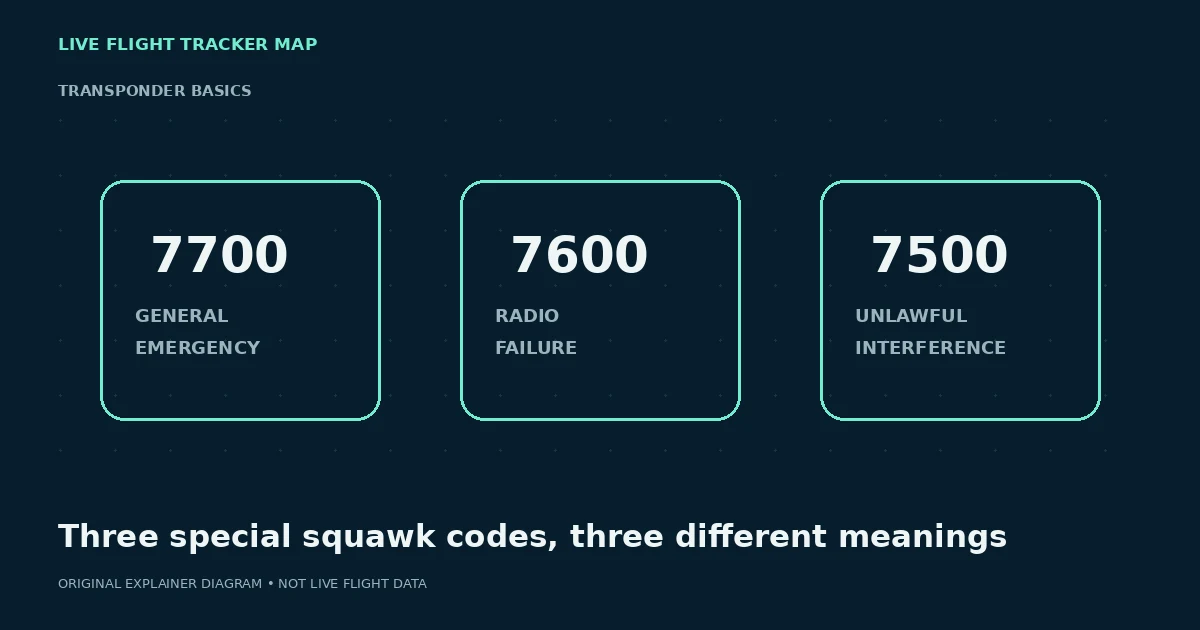
7700: general emergency
7700 is the widely recognized general-emergency code. It can be used in many very different circumstances, from medical or technical issues to other situations requiring priority handling. The code does not identify the cause.
If you see 7700, avoid inventing a narrative from altitude, route or social-media comments. Look for statements from the airline, airport or responsible authorities.
7600 and 7500 have specific meanings
7600 is associated with radio-communication failure. 7500 is associated with unlawful interference. These definitions explain the codes, but a public display can be delayed, stale, miscoded or incomplete. Treat a screenshot as a prompt to verify—not as conclusive evidence.
Do not contact an airline with speculation presented as fact simply because a public tracker displayed one of these values.
What to do as a viewer
For ordinary tracking, note the code and timestamp and continue to authoritative information if the situation matters. During a developing event, reliable official updates can lag because facts need to be established before publication.
Respect passengers and crew by avoiding sensational claims. A useful tracker explains uncertainty instead of amplifying it.
The three codes at a glance
In standard transponder use, 7700 is associated with a general emergency, 7600 with radio-communication failure and 7500 with unlawful interference. FAA guidance also warns pilots to avoid selecting these codes inadvertently because automated facilities treat them specially. The code identifies an alert category; it does not provide a public explanation of the event.
A screenshot can also outlive the underlying condition. If you share a tracker image, keep the timestamp visible, describe only what the field showed at that moment, and link to an authoritative update when one becomes available. That is more useful than attaching an unsupported cause to the code.
Further reading
Try a live flight search
Flight status by airline →How this guide is maintained
We review terminology against aviation and airline sources, test examples against the behavior of our own tracker, and separate position data from passenger-status claims. We do not invent a live status when a data source is missing. Corrections can be sent through the contact page.