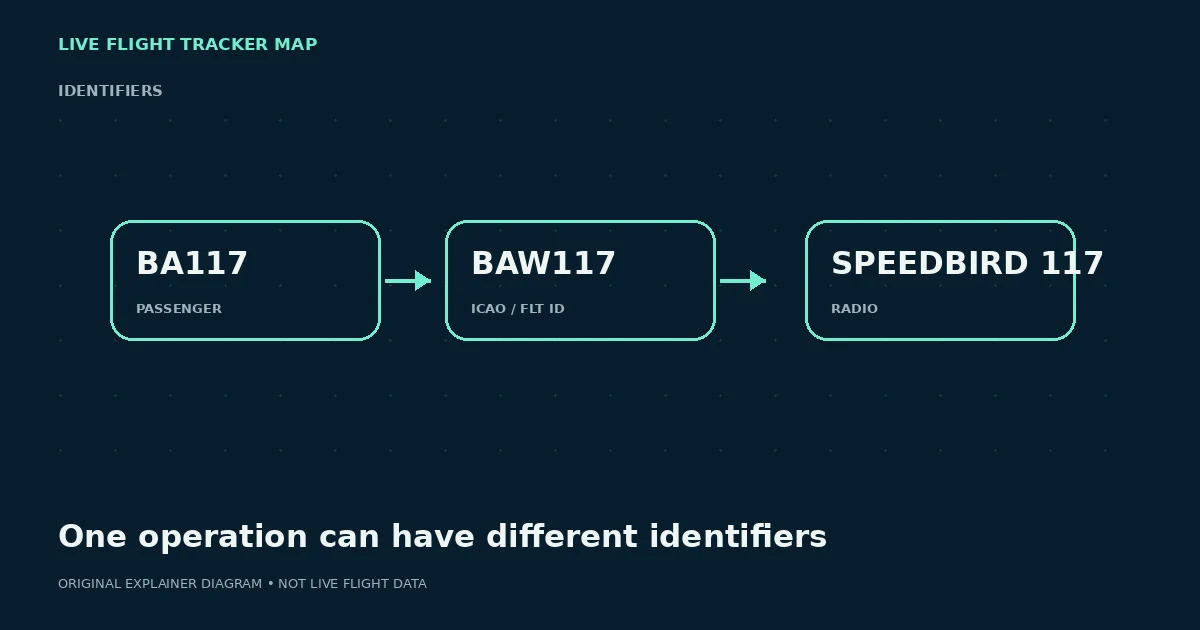
Three identifiers can describe one operation
A passenger flight number is designed for timetables, tickets and airline systems. It normally combines an airline designator with a service number, such as BA117 or EK202. Aviation systems can also identify the operator with a three-letter ICAO code, while air traffic radio uses an approved telephony callsign. Those identifiers serve different purposes, so they do not always look alike.
British Airways is a clear example: passengers recognize BA, aviation data can use BAW, and the radio callsign is SPEEDBIRD. Emirates uses EK for passenger flight numbers and UAE as its ICAO operator code. Seeing a different prefix in a tracker can therefore be normal rather than evidence that you found the wrong aircraft.
The numeric part is not guaranteed to map perfectly
Many flights produce an operating callsign that resembles the passenger number, but operational needs can create differences. Airlines may adjust callsigns to reduce radio confusion, and a codeshare can place several marketing flight numbers on one physical service. A positioning or ferry flight can also use an identifier that never appears on a passenger ticket.
That is why a tracker match should be checked against more than the letters and numbers. Compare the operating airline, departure and destination airports, timing and any available aircraft details.
Codeshare is the common passenger trap
A ticket sold under one airline code can say “operated by” another airline. The marketing number is useful for the booking, while the operating carrier is usually more useful when you are trying to identify the aircraft. If the map search fails for the marketing number, look for the operating flight number on the itinerary.
Do not paste a booking reference into a public tracker. A reservation code identifies your private booking; it is not an aircraft or flight identifier.
A reliable verification sequence
First, copy the complete flight number and travel date from the current itinerary. Second, identify the operating airline. Third, compare the route with any tracker result. Finally, use the operating airline or airport for passenger status, gates, cancellations and schedule changes.
The map is useful for exploring an available aircraft position. The official passenger-status source remains the place to make a travel decision.
Worked example: BA117, BAW117 and SPEEDBIRD
A traveller can see BA117 on a British Airways itinerary. ICAO assigns airlines three-letter and telephony designators for operational identification, so aviation data can represent British Airways with BAW while radio uses SPEEDBIRD. Those are different identifier systems describing the operator, not three competing passenger flights.
If a search result shows BAW117, compare the route and timing before deciding it is the same operation as BA117. If the ticket says another airline actually operates the service, switch your verification to that operating carrier instead of forcing the marketing number to match a callsign.
Further reading
Try a live flight search
Flight status by airline →How this guide is maintained
We review terminology against aviation and airline sources, test examples against the behavior of our own tracker, and separate position data from passenger-status claims. We do not invent a live status when a data source is missing. Corrections can be sent through the contact page.